
Stories
Gil Schafer’s Collected Life
The architect reflects on his journey of collecting, from his first architectural drawings to recent purchases with his wife, designer Courtnay Daniels.
January 20, 2025
Gil Schafer is, in his own words, “hopelessly addicted” to collecting. The walls of his office at Schafer Buccellato Architects are lined with paintings and etchings depicting buildings and landscapes. At his home in Maine, midcentury ceramics collected with his wife, designer Courtnay Daniels, lend color to the airy interior; “in the country,” meanwhile, where the couple has a house in Millbrook, New York, Gil’s love of brown furniture reigns supreme in the form of 19th-century English and American furniture.
Gil and Courtnay’s New York apartment is an amalgam of each of these collecting personalities, presenting European antiques in conversation with Asian ceramics and Courtnay’s robust collection of photography from the American South. In a conversation with the Design Leadership Network, the onetime Winter Show Design Co-Chair talks about developing personalities for different homes, working with blue-chip client collections, and learning to love his wife’s preferred medium.
So the basis of our conversation today is architects and designers who collect, which almost seems like a redundant concept — doesn’t every design professional collect? Why do you think that is?
It’s very true. For one, we’re always shopping, so we see tons of things. And we’re obviously visually oriented, so we’re always looking, and we are drawn to a piece of art or furniture or an object. It’s like a sickness — we can’t help ourselves. Since we have so much more of an opportunity to be looking for collectibles than the average person, the question becomes, how should we focus? Should we just gather items we love, or should we intentionally build a collection?
My wife is much more disciplined in that sense — we both love objects so we buy what we love, but she is a serious collector of Southern photography, and she is very focused about this. She may love a photograph, but if it doesn’t fit her criteria, she won’t buy it. We don’t have that same discipline in the other things that we buy to put around us, so the question becomes about which milieu is best suited to them. Sometimes they don’t fit anywhere, and they go into what we call the warehouse for our “someday house.”
We all have one of those! I wonder, looking back, do you recall when you first began getting excited about collecting, and was there an item in particular that sparked that?
When I was in college, because I was all interested in architecture, I started collecting drawings by contemporary architects. This was in the 80s and early 90s, so I had Robert Venturi drawings, Michael Graves, Bernard Tschumi; I had a Zaha Hadid drawing, one by Léon Krier. I was very focused. And then, I guess I realized that there was so much else to love that I kind of lost my discipline. My mind wandered, and I expanded the things that I like.
So tell us a bit about how you think your taste for collecting has evolved since then.
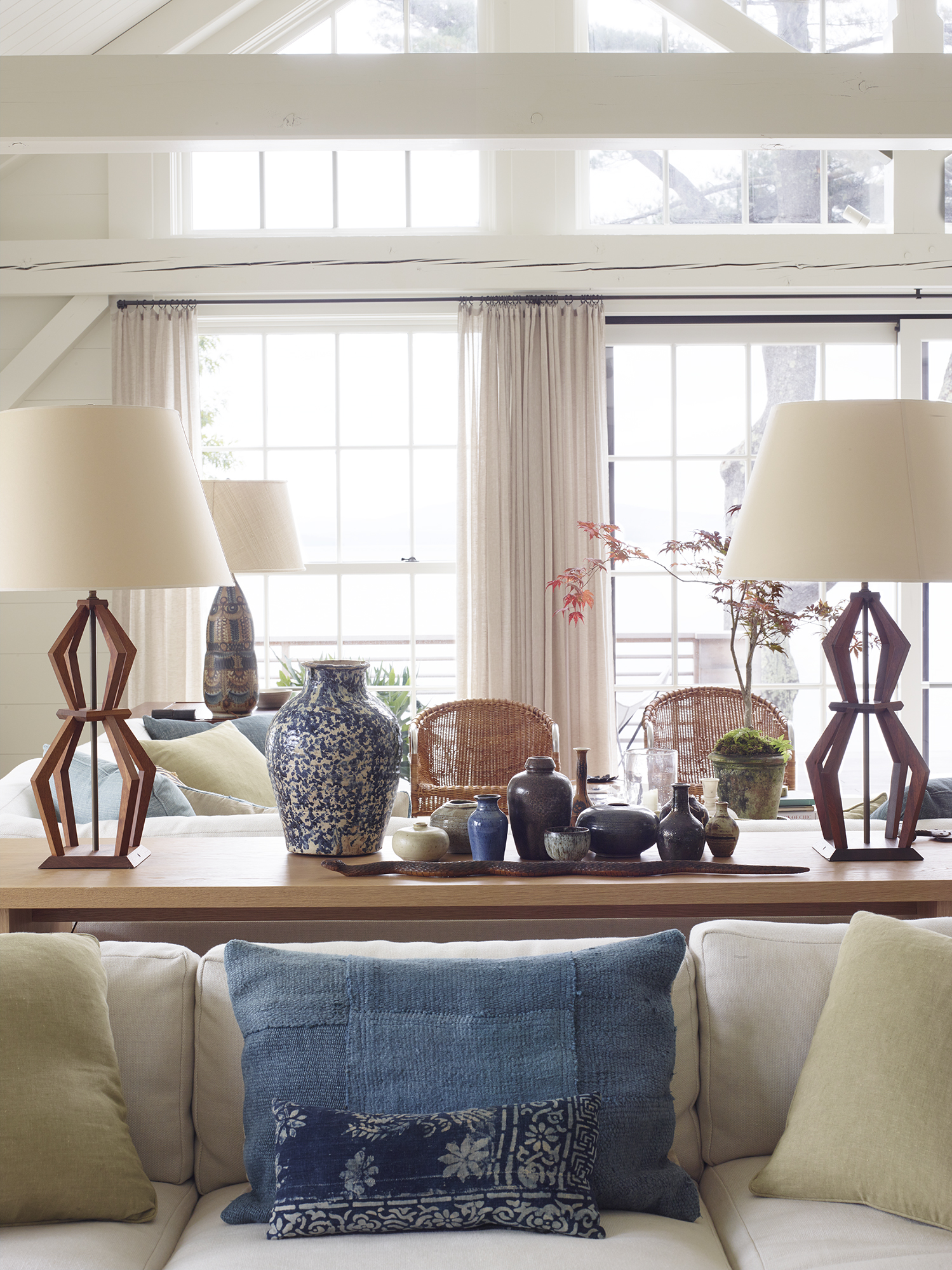
Well, I think your taste is influenced all the time by what you see and open your eyes to, so it changes over the course of your life, as you see more and learn more. For example, when I built my house in Maine, it had a very different kind of interior than anything I’d had before. And since it was a little more modern, I had been looking at midcentury furniture, and I thought, well, I love ceramics, so I began to look at ceramics from that period, and now the whole house is filled with various midcentury ceramics. That interest was entirely shaped by the project I was working on and where my eye was going at that time.
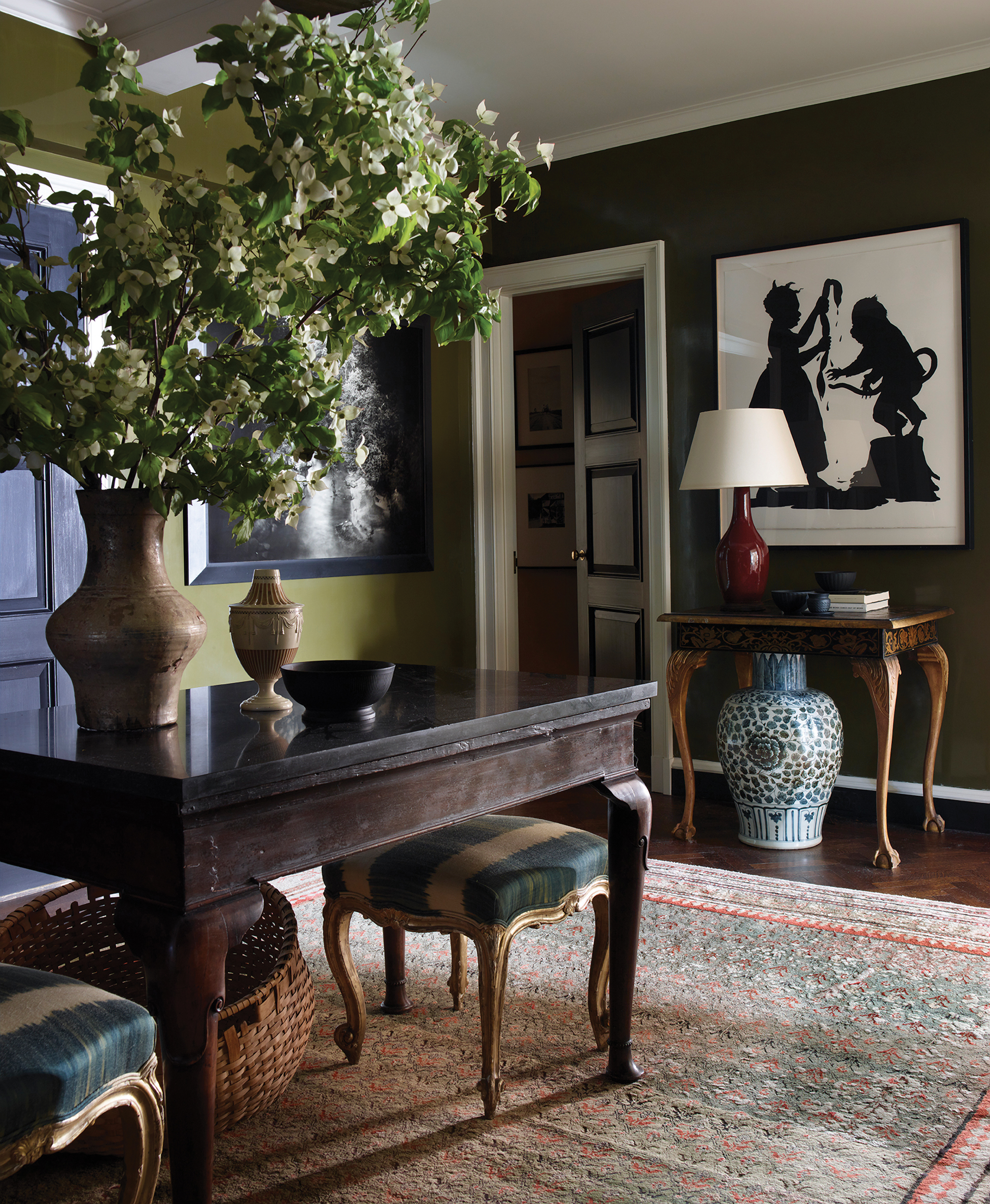
Something else that really opened me up was marrying my wife, who has her own set of collecting interests. She loves basalt ware, for example. In the front hall of our New York apartment, you’ll see work by Kara Walker and Sally Mann and some basalt ware on the table that Courtnay has collected next to an 18th-century incense burner that I bought for her, and then a Chinese jar. I tend to be very English or American, and she likes Continental and to mix things more, so that has really broadened my eye.
Did you find that when you got married that was a conscious decision, to adapt your collecting styles or to merge them? Or do you each collect your own things and then they exist in dialogue with each other in your homes?
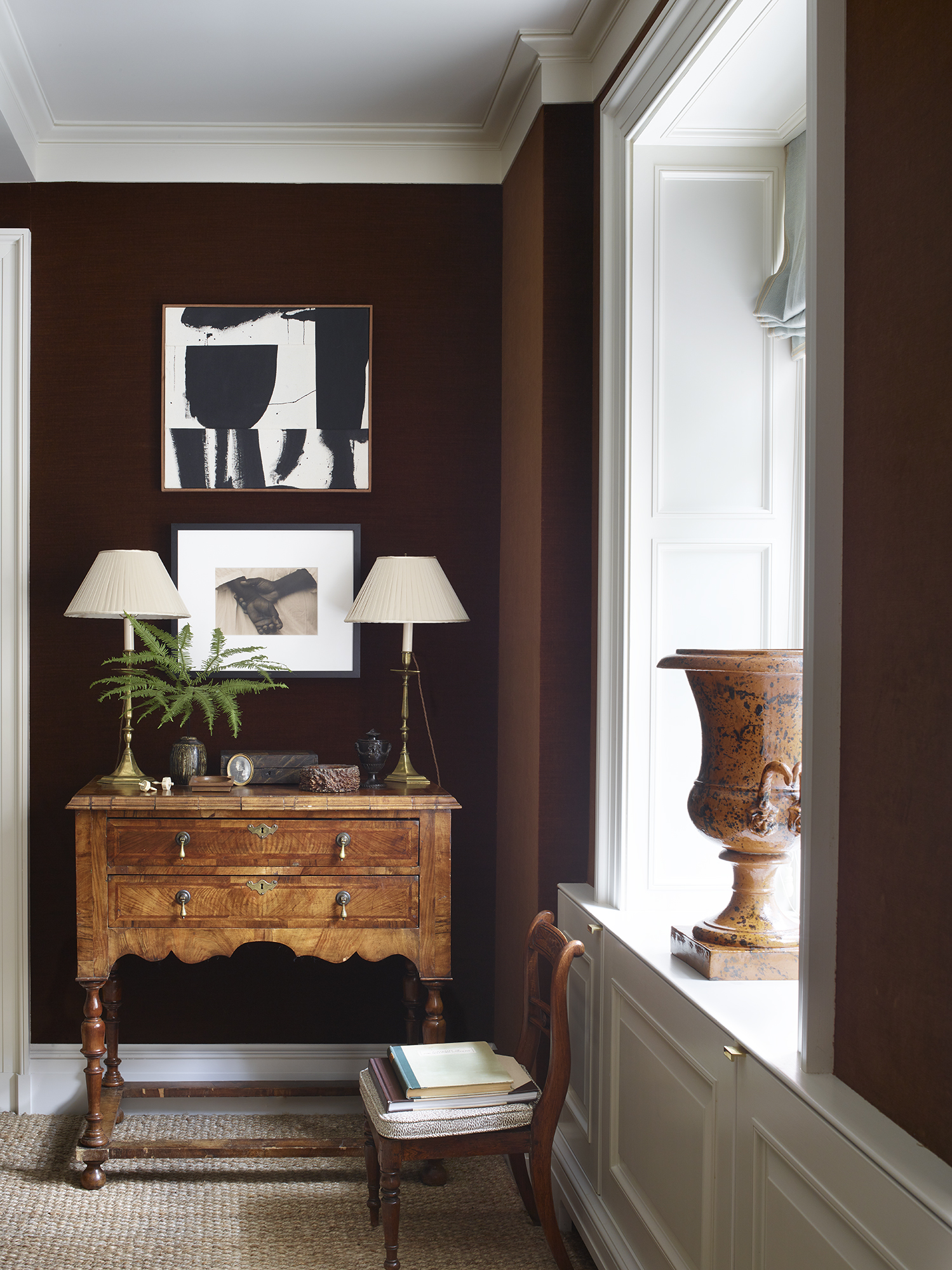
Sometimes they are in dialogue and sometimes they’re not! Courtnay buys all the photographs because they really apply to her collection. Truthfully, I never had an interest in photography before being married to her, and now we live with a ton of photography, so I do tease her about that. I tend to prefer painting and drawing — so we have some good-natured tension around that.
There are certain things that Courtnay buys just because she likes them and certain things that I buy to which Courtnay will say, “okay, that will go in your office!” It’s always nice when the Venn diagram of our interests
overlaps, but it’s also fun to challenge each other.
Speaking of your office, you have a workspace that is much more collected than most; can you tell us about your approach there?
I wanted the front part of the office to feel a little bit domestic, so I thought we should have art on the walls, and I chose art that depicted landscapes or buildings — etchings or paintings or watercolors that were architecture or landscape related — and that’s what the clients see when they come to the office. My own office is just jammed with stuff on the wall, and it’s really just about what I love. Some of them are architectural drawings, some of them are contemporary; there’s a photograph that my wife gave me. It’s just different things that appeal to my eye, which is eclectic — which can be a bit of a problem!
And what about at home? Do you look at collections differently for your different spaces?
It’s nice having more than one house in that they all have different atmospheres. Our home in Maine is more contemporary, it’s all white, so the things we put in Maine are very different than in the country, which has a more 19th-century American and English feel. In New York, it’s more eclectic. It’s fun to be able to think: In which place will this item live best?
How do clients’ collections come into play in your work?
Some clients are serious collectors, and some just want pretty things around. The clients who are serious collectors tend to be very serious about where they want each item. We’re doing a house right now, for example, with Victoria Hagan, for a client that has a contemporary art collection, and we have specifically placed every piece. The works are very large-scale, so we had to make sure they fit and that they were lit appropriately. We even made decisions about where to place windows or doors, to ensure there was a wall for certain pieces. So in that case, the collection was very much at the beginning of the design process, because we needed the architecture to serve the art.
And then, in a very different approach we had another client who collected furniture by architects from the 1950s through 1970s. He had this idea to juxtapose that into an architecture that was in the Arts and Crafts style. So that was a really interesting exercise to do with him, to bring those two together.
I’m sure you sometimes learn about new styles or eras of collecting from clients.
Oh, absolutely. In the case of that client who collected furniture by architects, I knew some of it, but I didn’t know the breadth of it. He happened to also collect ceramics from the mid-20th century, and that was a whole new world to me at the time, which I eventually ended up exploring myself.
I always end up learning when working with clients. When they are serious about what they collect, they want to take you on that journey of learning from them. It was the same with my wife, who has taught me so much about photography. I think most of us in the design world are very interested in learning constantly — we always want to train our eye, to refine it, and to grow our knowledge. That’s a really fun part of what we do.
In the theme of constantly evolving, is there anything in particular you are excited about right now?
Well, my wife says we have too much brown furniture, and that I need to learn to look beyond that a little bit. So I’m trying to do that. I grew up in an old American house, and my parents loved brown furniture, and I think since that’s the way I grew up, I kind of gravitate to that. My wife, on the other hand, grew up with a mother with incredible taste, who really loved painted furniture. I’ve been trying to broaden my vocabulary on that front because I think it provides another layer that’s visually very wonderful.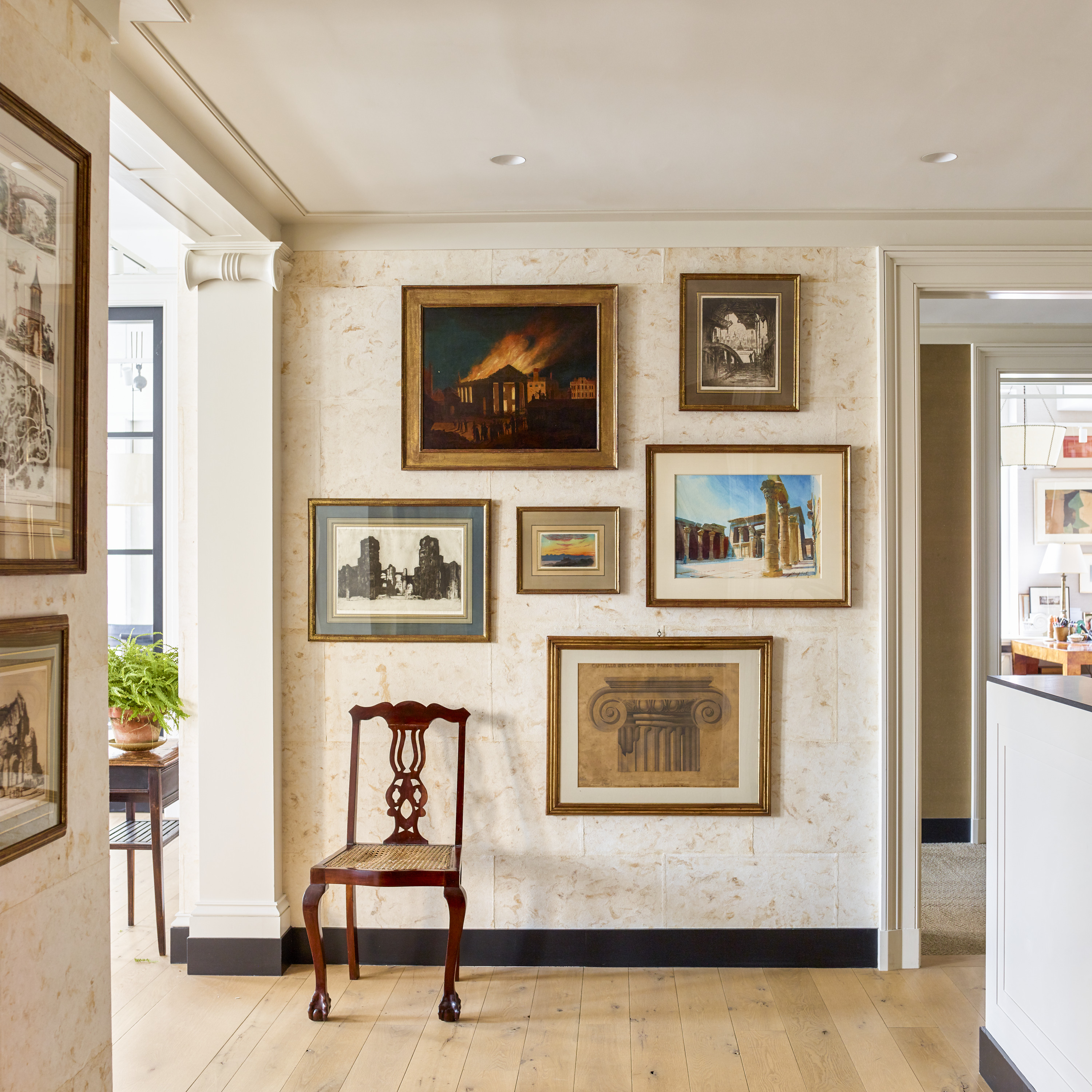
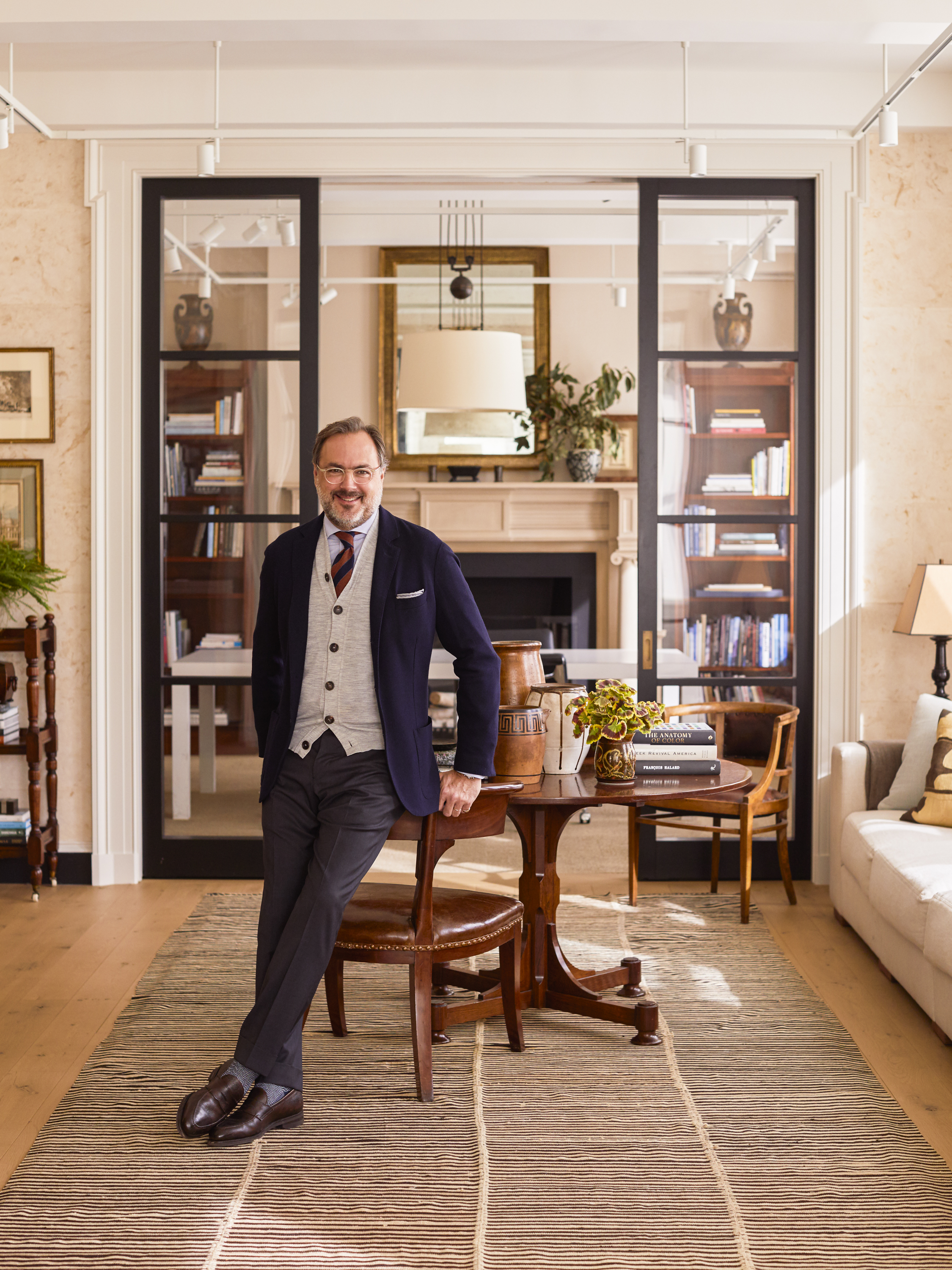
Gil and Courtnay’s New York apartment is an amalgam of each of these collecting personalities, presenting European antiques in conversation with Asian ceramics and Courtnay’s robust collection of photography from the American South. In a conversation with the Design Leadership Network, the onetime Winter Show Design Co-Chair talks about developing personalities for different homes, working with blue-chip client collections, and learning to love his wife’s preferred medium.
So the basis of our conversation today is architects and designers who collect, which almost seems like a redundant concept — doesn’t every design professional collect? Why do you think that is?
It’s very true. For one, we’re always shopping, so we see tons of things. And we’re obviously visually oriented, so we’re always looking, and we are drawn to a piece of art or furniture or an object. It’s like a sickness — we can’t help ourselves. Since we have so much more of an opportunity to be looking for collectibles than the average person, the question becomes, how should we focus? Should we just gather items we love, or should we intentionally build a collection?
My wife is much more disciplined in that sense — we both love objects so we buy what we love, but she is a serious collector of Southern photography, and she is very focused about this. She may love a photograph, but if it doesn’t fit her criteria, she won’t buy it. We don’t have that same discipline in the other things that we buy to put around us, so the question becomes about which milieu is best suited to them. Sometimes they don’t fit anywhere, and they go into what we call the warehouse for our “someday house.”
We all have one of those! I wonder, looking back, do you recall when you first began getting excited about collecting, and was there an item in particular that sparked that?
When I was in college, because I was all interested in architecture, I started collecting drawings by contemporary architects. This was in the 80s and early 90s, so I had Robert Venturi drawings, Michael Graves, Bernard Tschumi; I had a Zaha Hadid drawing, one by Léon Krier. I was very focused. And then, I guess I realized that there was so much else to love that I kind of lost my discipline. My mind wandered, and I expanded the things that I like.
So tell us a bit about how you think your taste for collecting has evolved since then.
Well, I think your taste is influenced all the time by what you see and open your eyes to, so it changes over the course of your life, as you see more and learn more. For example, when I built my house in Maine, it had a very different kind of interior than anything I’d had before. And since it was a little more modern, I had been looking at midcentury furniture, and I thought, well, I love ceramics, so I began to look at ceramics from that period, and now the whole house is filled with various midcentury ceramics. That interest was entirely shaped by the project I was working on and where my eye was going at that time.
Something else that really opened me up was marrying my wife, who has her own set of collecting interests. She loves basalt ware, for example. In the front hall of our New York apartment, you’ll see work by Kara Walker and Sally Mann and some basalt ware on the table that Courtnay has collected next to an 18th-century incense burner that I bought for her, and then a Chinese jar. I tend to be very English or American, and she likes Continental and to mix things more, so that has really broadened my eye.
Did you find that when you got married that was a conscious decision, to adapt your collecting styles or to merge them? Or do you each collect your own things and then they exist in dialogue with each other in your homes?
Sometimes they are in dialogue and sometimes they’re not! Courtnay buys all the photographs because they really apply to her collection. Truthfully, I never had an interest in photography before being married to her, and now we live with a ton of photography, so I do tease her about that. I tend to prefer painting and drawing — so we have some good-natured tension around that.
There are certain things that Courtnay buys just because she likes them and certain things that I buy to which Courtnay will say, “okay, that will go in your office!” It’s always nice when the Venn diagram of our interests
overlaps, but it’s also fun to challenge each other.
"Your taste is influenced all the time by the things you see and what you open your eyes to, so it changes over the course of your life, as you see more and learn more."
Speaking of your office, you have a workspace that is much more collected than most; can you tell us about your approach there?
I wanted the front part of the office to feel a little bit domestic, so I thought we should have art on the walls, and I chose art that depicted landscapes or buildings — etchings or paintings or watercolors that were architecture or landscape related — and that’s what the clients see when they come to the office. My own office is just jammed with stuff on the wall, and it’s really just about what I love. Some of them are architectural drawings, some of them are contemporary; there’s a photograph that my wife gave me. It’s just different things that appeal to my eye, which is eclectic — which can be a bit of a problem!
And what about at home? Do you look at collections differently for your different spaces?
It’s nice having more than one house in that they all have different atmospheres. Our home in Maine is more contemporary, it’s all white, so the things we put in Maine are very different than in the country, which has a more 19th-century American and English feel. In New York, it’s more eclectic. It’s fun to be able to think: In which place will this item live best?
How do clients’ collections come into play in your work?
Some clients are serious collectors, and some just want pretty things around. The clients who are serious collectors tend to be very serious about where they want each item. We’re doing a house right now, for example, with Victoria Hagan, for a client that has a contemporary art collection, and we have specifically placed every piece. The works are very large-scale, so we had to make sure they fit and that they were lit appropriately. We even made decisions about where to place windows or doors, to ensure there was a wall for certain pieces. So in that case, the collection was very much at the beginning of the design process, because we needed the architecture to serve the art.
And then, in a very different approach we had another client who collected furniture by architects from the 1950s through 1970s. He had this idea to juxtapose that into an architecture that was in the Arts and Crafts style. So that was a really interesting exercise to do with him, to bring those two together.
I’m sure you sometimes learn about new styles or eras of collecting from clients.
Oh, absolutely. In the case of that client who collected furniture by architects, I knew some of it, but I didn’t know the breadth of it. He happened to also collect ceramics from the mid-20th century, and that was a whole new world to me at the time, which I eventually ended up exploring myself.
I always end up learning when working with clients. When they are serious about what they collect, they want to take you on that journey of learning from them. It was the same with my wife, who has taught me so much about photography. I think most of us in the design world are very interested in learning constantly — we always want to train our eye, to refine it, and to grow our knowledge. That’s a really fun part of what we do.
In the theme of constantly evolving, is there anything in particular you are excited about right now?
Well, my wife says we have too much brown furniture, and that I need to learn to look beyond that a little bit. So I’m trying to do that. I grew up in an old American house, and my parents loved brown furniture, and I think since that’s the way I grew up, I kind of gravitate to that. My wife, on the other hand, grew up with a mother with incredible taste, who really loved painted furniture. I’ve been trying to broaden my vocabulary on that front because I think it provides another layer that’s visually very wonderful.
“I think most of us in the design world are very interested in learning constantly — we always want to train our eye, to refine it.”
QUOTE ATTRIBUTION EXAMPLE


